Technology
Only one layer is meant to take the hit.
Four layers, each with one job. What they do, and what no film can do, in plain words and without a number we have not measured.
The layers
Outside in.
Listed as they sit on the car, from the face you touch to the liner the installer peels away.
Layer 1 of 4
Takes the wear.
A thin elastic coating on the outer face. It carries the surface: gloss or satin, water repellency, resistance to staining. A light scratch displaces it rather than removing it, and warmth lets it relax back flat. A cut that removes material stays.
Layer 2 of 4
Absorbs the impact.
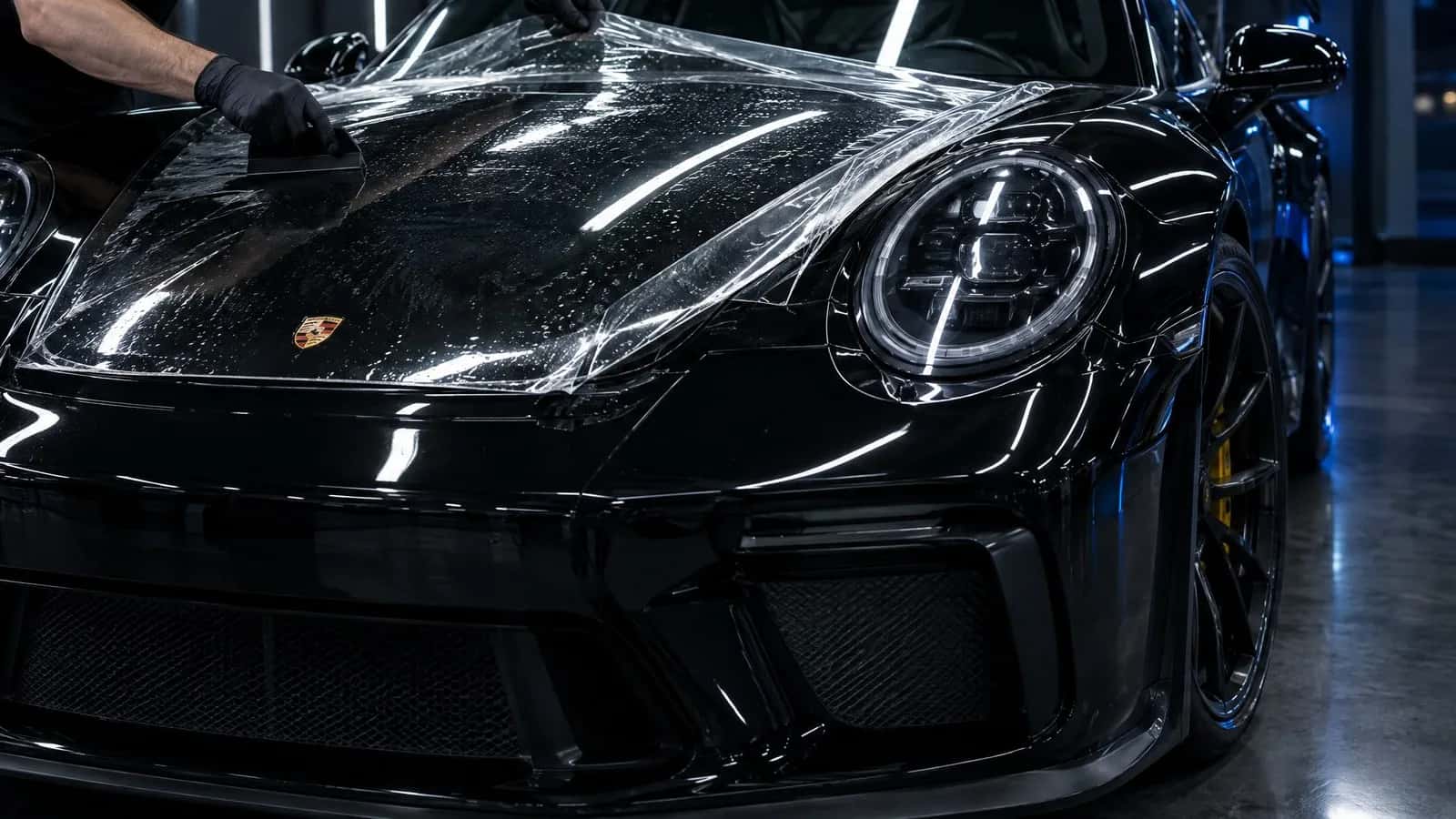
The bulk of the film, a thermoplastic polyurethane. It is elastic enough to deform under a stone strike and spread that energy sideways instead of passing it straight into the clear coat, then recover its shape. This is the layer that is meant to take the hit.
Layer 3 of 4
Holds it on, and lets it off again.
A pressure-sensitive adhesive that bonds the film to the paint with enough tack to hold a stretched edge on a curve, and releases again with heat without taking the factory clear coat with it.
Layer 4 of 4
Protects the adhesive until the install.
A release liner that keeps the adhesive clean and the roll stable. The installer peels it off at the car, so it is never part of what is on the paint. It is also the layer a plotter blade must stop at, which is why the cut spec starts with its thickness.
Self-healing
Warmth closes the light marks.
Warmth from the sun, a warm rinse or a heat gun lets the top coat relax back flat over light swirls and wash marks. If you can catch it with a fingernail, assume it stays.
Water
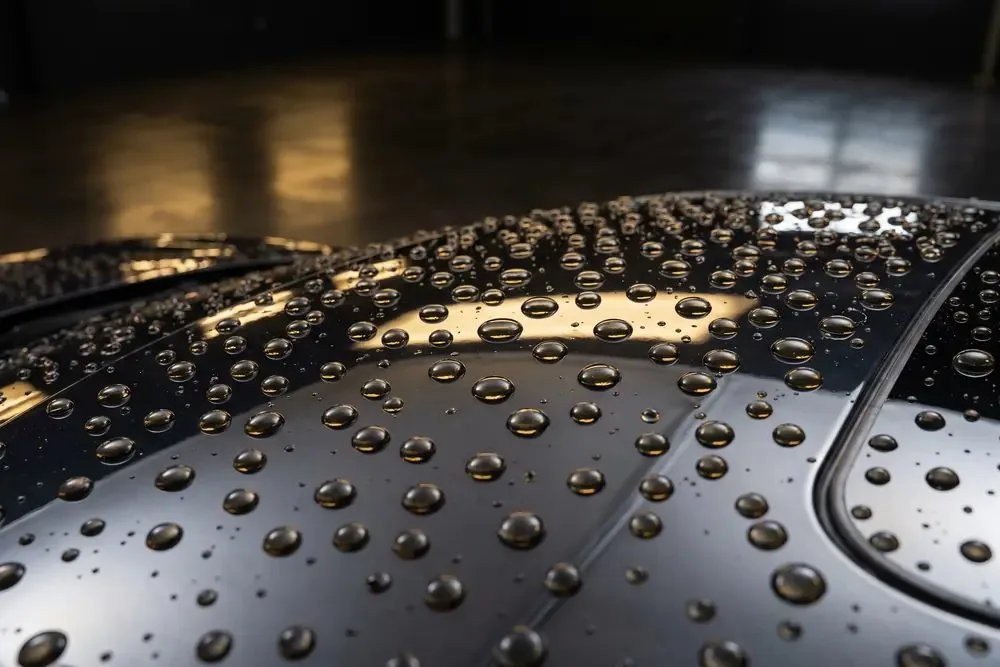
Beads, then rolls off.
A low-energy surface pulls water into beads instead of letting it sit flat, so it rolls off carrying dirt with it and leaves fewer mineral spots behind.
The effect fades with use and washing, and it is restored with maintenance. It is a surface property, not a permanent one.
Limits
What film does, and what it doesn’t.
It does
- Chips and scuffs. Stone chips, scuffs and light scratches land in the film instead of the paint.
- Light swirls. Warmth lets the top coat relax back flat over light swirls and wash marks.
- Removal. It comes off again, professionally, without taking the factory clear coat with it.
It doesn’t
- Hail. Film does not stop hail. It takes chips, scuffs and light scratches; hail dents the metal underneath, and no film changes that.
- Gouges. Self-healing closes light swirls and scuffs in the top coat. A gouge that removes material does not close. If you can catch it with a fingernail, assume it stays.
- Permanence. Film is a wear layer, not a permanent one. This site states no service life, because none has been measured.
How it goes on
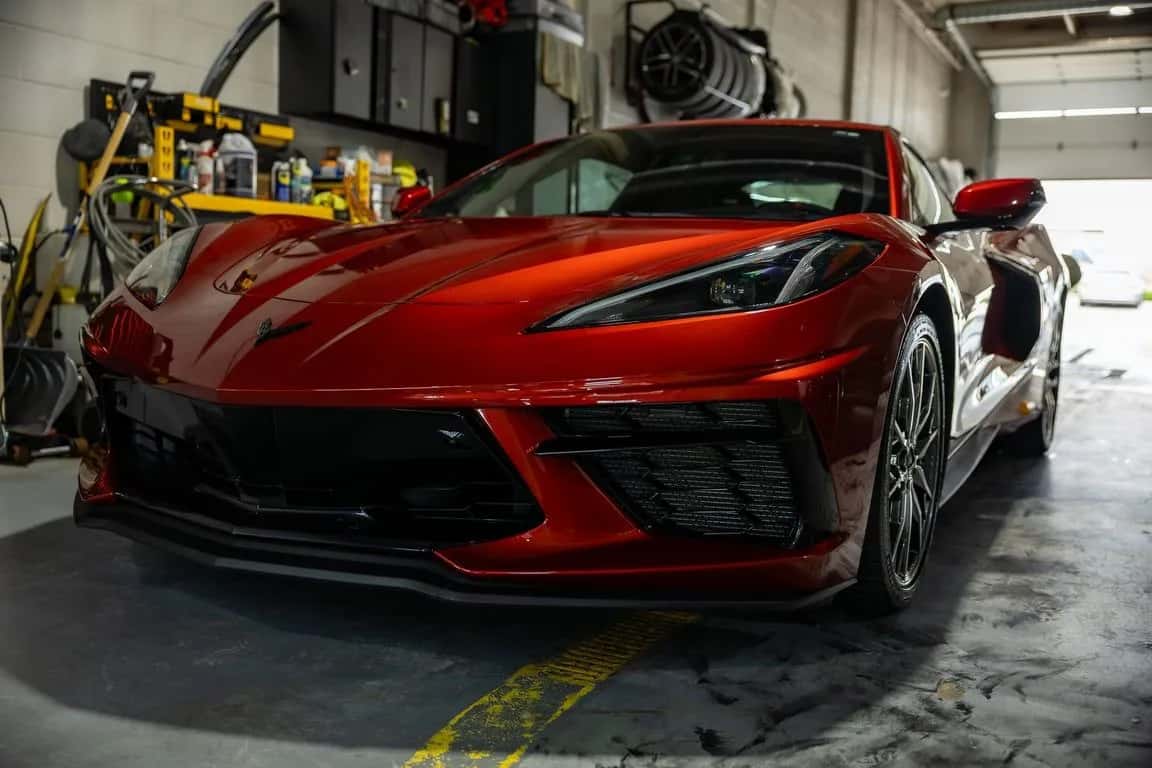
The film is half of it. The bay is the other half.
What a careful installation looks like, written down. It is what to ask any shop about before you book.
- Heated bay
- The film goes on in a heated bay. Cold slows the adhesive and stiffens the film, and a cold-bay edge is the one that lifts later.
- Edge wrapping
- Edges are wrapped and tucked at shut lines wherever the panel allows, so the line disappears and a wash mitt has nothing to catch.
- Cure protocol
- The car stays dry and unwashed while the adhesive cures, and the shop tells you how long that is before you drive away.
See it on your car.
info@arkppf.coma person reads it, and answers within one business day